
Dining Out Low-Sodium: How to Enjoy Restaurants Again
Note: I am not a registered dietitian or doctor. The tips in this guide are designed to help significantly lower sodium when dining out, but preparation varies by restaurant. Always consult your healthcare provider about your personal dietary needs.
If you’ve recently transitioned to a low-sodium lifestyle, the thought of opening a restaurant menu can feel overwhelming. Restaurant kitchens are notorious for using salt aggressively—not just for flavor, but as a preservative and quick tenderizer. When every dish seems laced with hidden sodium, stepping into a sit-down restaurant can easily feel like a high-stakes guessing game.
It is completely normal to feel like dining out is no longer an option, or that you’re destined to settle for plain, uninspired side salads forever. But here’s the good news: eating low-sodium at sit-down restaurants is entirely possible, and it can still be a genuinely enjoyable culinary experience.
With fast-food and chain dining you often have the advantage of actual nutrition information but sit-down can be even better since there is an active kitchen staff preparing dishes to order, which should give you more control over how your meal is made.
The Golden Rules for Low-Sodium Dining
Before diving into specific cuisines, a few universal strategies apply no matter where you make a reservation:
Preview the Menu Early: Check the menu online before you leave home. Look for items centered on fresh, whole ingredients—like grilled proteins, steamed vegetables, or raw-bar selections—rather than pre-marinated, heavily sauced, or cured items.
Call Ahead (Timing Matters): If you are unsure if a restaurant will be able to accomadate, give them a quick call during quiet hours—ideally between 2:00 PM and 4:00 PM, well outside the lunch and dinner rushes. Explain your dietary needs to the manager or maybe even the chef when they aren’t overwhelmed; they’ll be much more receptive and helpful in identifying dishes that can be prepared without added salt.
Ask Clear and Polite Accommodations: Kitchens deal with demanding custom requests constantly, so a respectful approach can go a long way. You don’t need to over-explain or frame your request as a series of questions. Start with a quick, pleasant acknowledgment—such as thanking your server for their help or apologizing that your order will be on the more complicated side—and then state clearly and directly what will make your meal work for you.
BYOC (Bring Your Own Condiments): Don’t hesitate to pack secret weapons in your bag or coat pocket! Carrying your own low-sodium sauce, ketchup or dressing lets you add vibrant flavor to simply prepared, unsalted restaurant dishes without compromising your health goals. Keep in mind that most restaurants don’t love it when guests bring outside food so just keep it in your pocket or bag and pull it out only to add a little to your food.
With those foundational rules in mind, let’s look at how they play out in the real world. While every restaurant is unique, certain cuisines naturally offer more flexibility for low-sodium diners than others.
Here is a breakdown of the specific restaurant types I personally frequent most, along with what to look for and what to request at each.
1. Steak/Seafood Restaurants
Of all the sit-down categories, steak and seafood spots are often the most straightforward to navigate on a low-sodium diet. Because these kitchens rely heavily on high-heat grilling, searing, and fresh ingredients rather than heavy premade sauces, you have plenty of room to build a delicious, low-salt meal.
What to Get
- Main Proteins: Simple cuts of steak grilled with zero added salt, or fresh finfish (like salmon, cod, or halibut) seasoned simply with black pepper and fresh lemon juice.
- Salads & Dressings: Fresh green salads with plain olive oil and fresh lemon wedges or balsamic vinegar on the side to mix your own dressing (or discreetly use your own low-sodium dressing from home).
- Vegetables: Fresh vegetables specifically requested to be steamed plain or sautéed in plain olive oil with no added salt or seasonings.
- Potatoes & Starches: A plain baked potato (eat the fluffy interior if the skin is salted) or house-cut fries made from raw potatoes dropped in fresh oil with zero added salt.
What to Avoid
- Protein Pitfalls: Steaks and fish basted with salted butter, chicken breasts (which are almost always soaked in a saltwater brine before cooking), and shellfish like shrimp, lobster, crab, or scallops (which are naturally high in sodium or pre-treated in salt solutions).
- Salad Pitfalls: Premade vinaigrettes or creamy dressings, along with salty toppings like feta, parmesan, bacon bits, and croutons.
- Vegetable Pitfalls: Standard house vegetables, as kitchens frequently boil greens in heavily salted water or toss them in pre-salted butter before serving.
- Potato Pitfalls: Standard frozen fries (which come pre-salted from the manufacturer), pre-seasoned potato wedges, and mashed potatoes (which are loaded with salt, salted butter, and cream).
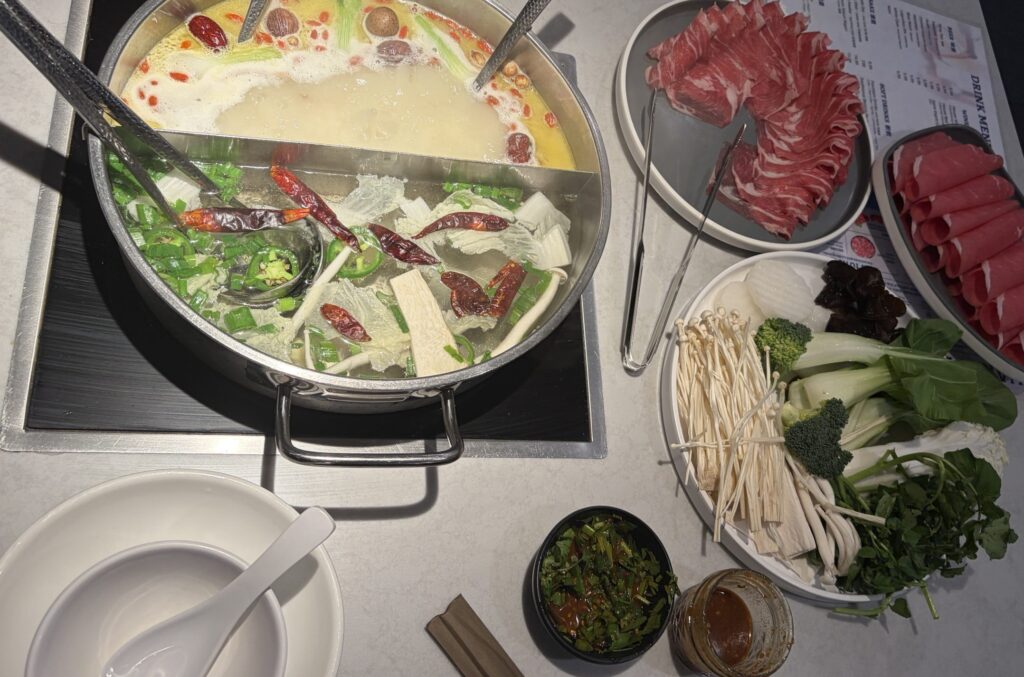
2. Hot Pot
Hot pot might feel like a surprise inclusion for a low-sodium guide since traditional broths and dipping sauces are notoriously high in salt. However, because you cook your own fresh ingredients right at the table, it is actually one of the absolute best sit-down dining experiences for taking total control of your meal.
What to Get
- The Key: A Custom DIY Dipping Sauce: The sauce is the true secret to an incredible low-sodium hot pot meal, and it just takes a little pre-planning!
- At Home: Pre-mix a low-sodium base sauce to bring with you using ingredients like low-sodium coconut aminos, low-sodium sweet chili sauce, low-sodium chili oil, unseasoned rice vinegar and no-salt-added tahini.
- At the Restaurant: Hit the sauce bar to fill a bowl with fresh, unsalted add-ins like chopped cilantro, green onions, sesame oil, and a touch of sugar.
- At the Table: Combine your home-brewed sauce with your fresh herbs from the bar, mix well, and you’re good to go!
- Custom Base (Water + Fresh Aromatic Herbs): Instead of ordering a standard sodium-packed broth, ask your server for a pot filled with plain boiling water infused with fresh aromatics. Most kitchens are happy to throw in raw garlic, fresh ginger, green onions, mushrooms and even chilis to create a light, naturally fragrant cooking base. A lot of places also offer a split pot so if you are out with some non-low sodium eaters they can still enjoy the salty broth.
- Raw, Unmarinated Proteins: Stick to thin slices of fresh, plain, unmarinated meats (like beef, lamb, or pork cuts) that cook directly in your hot broth without added salt. There may also be some fresh unmarinated fish options but you will need to be more cautious.
- Fresh Veggies & White Rice: Load up on fresh, raw vegetables from the bar (leafy greens, bok choy, daikon radish, lotus root, brocoli, mushrooms, corn) and pair your meal with a simple bowl of plain steamed white rice.
What to Avoid
- Standard Pre-Made Broths: Skip all standard menu broths (like spicy tallow, bone broth, or mushroom base), as these are concentrated salt bombs that will absorb straight into your ingredients.
- Pre-Cooked & Processed Appetizers: Avoid the cooked side dishes at the bar or menu, such as fried dumplings, egg rolls, fish cakes, and processed meatballs, which are packed with hidden preservatives and sodium.
- Marinated or Pre-Seasoned Meats: Steer clear of meats labeled as pre-marinated, spicy-seasoned, or pre-cured.
- Sneaky High-Sodium Noodles: Be extra careful with instant ramen noodles, udon, or processed wheat noodles, which often have surprisingly high amounts of sodium built right into the noodle dough itself. Stick to plain white rice instead.
3. Sushi & Japanese Restaurants
Sushi can be a fantastic, fresh option for low-sodium dining because so much of the food is served raw, plain, and unprepared. However, the hidden sodium in sushi usually comes from three places: soy sauce, seasoned sushi rice, and heavy specialty sauces. With a few simple swaps, you can easily enjoy a light, delicious meal.
What to Get
- Sashimi: Pure, raw slices of fresh fish (like salmon, tuna, or yellowtail) without rice or sauces are naturally very low in sodium and packed with flavor. You can often ask for a side of plain unseasoned white rice to have with it instead of seasoned sushi rice.
- Simple Nigiri & Basic Rolls: If you want rice that is okay because it is usually not super high in sodium. Stick to simple nigiri or basic rolls wrapped in seaweed (like tuna or cucumber rolls). Ask for them without extra sauces(a lot of places brush on a ponzu or soy), masago/tobiko (fish roe, which is cured in salt), or crunchy tempura bits.
- Bring Your Own Low-Sodium Soy Sauce: Traditional soy sauce contains roughly 900–1,000+ mg of sodium per tablespoon. They will often have low sodium soy sauce at the restaurant which unfortunately still comes in at 500+ mg so if that doesn’t fit in your diet I recommend bringing your own low sodium coconut aminos or homemade low sodium spicy mayo.
- Fresh Edamame (No Salt): Steamed edamame in the pod is a great starter—just explicitly ask the kitchen to prepare yours with zero added salt on top.
What to Avoid
- Specialty / House Rolls: Fancy rolls are often loaded with hidden salt from spicy mayo, eel sauce, sweet soy glaze, cream cheese, tempura batter, and salted fish roe.
- Miso Soup: While comforting, miso paste is inherently high in sodium. A small bowl of miso soup can easily pack 800–1,000 mg of sodium before your main food even arrives.
- Pickled Ginger & Wasabi Glazes: Standard commercial pickled ginger (gari) is often processed in a saltwater brine with preservatives. Stick to raw fresh cucumber or lemon slices for a palate cleanser.
- Tempura & Teriyaki Items: Tempura batters are typically seasoned with salt, and teriyaki glazes are built on concentrated soy sauce and sugar reductions.
4. Diners & Breakfast Spots
Diners can feel intimidating because standard breakfast fare is notorious for heavy salt, processed meats, and salted butter on the flat top. However, because diner cooks prepare almost everything to order on the spot, you can easily customize a great low-sodium meal.
What to Get
- Unsalted Hash Browns: Finding these has gotten a little harder in recent years as a lot of trendy places have moved to pre-seasoned roasted potatoes and home fries. Check photos on Google Maps before you go—if you see those old-school shredded hash browns, you can usually request them cooked on a griddle with plain oil and zero added salt. If they can’t do potatoes you can usually substitute for fresh fruit.
- Veggie-Packed Omelets or Skillet: Ask for an omelet stuffed purely with fresh, raw vegetables (spinach, tomatoes, onions, bell peppers, mushrooms) prepared with zero added salt, cheese, or butter. If they have the unsalted hashbrowns you can get this as a skillet.
- Fresh Eggs (Cooked Plain): Order eggs poached, hard-boiled, or cooked using plain oil or no oil/butter at all instead of the shared griddle salted butter.
- Plain Toast (Unbuttered): Bread is normally pretty high in sodium but if its your only real source of added salt for the meal you can probably afford to spend 200mg on a slice of toast. Whole grain, sourdough, or white toast requested specifically without salted butter. You can top it with a poached egg, fresh avocado, or jelly.
- Plain Oatmeal & Fruit: Oatmeal cooked strictly in plain water (ask that no salt be added to the pot) topped with fresh fruit, berries, or raw nuts.
What to Avoid
- Processed Breakfast Meats: Bacon, sausage links/patties, ham, scrapple, and corned beef hash are heavily cured and packed with sodium.
- Pre-Seasoned Frozen Potatoes: Modern diner chains often use frozen hash brown patties or pre-seasoned home fries that come heavily salted right out of the box. Always ask if their potatoes are fresh-shredded or plain frozen shredded!
- Pancakes & Waffles: Premade pancake and waffle batters contain baking soda, baking powder, and added salt, plus they are typically cooked in salted butter on the flat top.
- Cheese, Gravy & Hollandaise: Country gravy, Hollandaise sauce, and processed cheese slices will quickly push your meal over your sodium goals.
5. Hibachi & Teppanyaki
Hibachi is another fantastic sit-down option because your food is prepared right in front of you on a flat-top grill. Because the chef works right at your table, you can easily request custom, low-sodium modifications before a single drop of soy sauce hits your portion.
What to Get
- Custom Grill Orders (Cooked First): Order a standard hibachi meal then when the chef comes over before he starts cooking ask to receive your food before any sauce or salt is added. Hibachi chefs are usually happy to hand off your veggies and protein first since the sauces are usually the last thing they add anyway.
- Unseasoned Proteins & Veggies: Nearly all the protein and veggie options are unseasoned and unmarinated.
- Plain Steamed White Rice: Request plain steamed white rice instead of the standard hibachi fried rice to skip the heavy soy sauce, salted butter, and seasoning mixes.
- BYOC (Your Own Dipping Sauce): Bring your pre-mixed low-sodium sauce from home (or a bottle of low-sodium coconut aminos) to add flavor to your simply grilled proteins and vegetables at the table.
What to Avoid
- Garlic Butter & Soy Sauce Splashes: Standard hibachi cooking relies heavily on scoops of garlic butter (often salted) and generous squirts of soy sauce squirted over everything on the flat-top.
- Hibachi Fried Rice or Yakisoba: The classic fried rice and Yakisoba served at teppanyaki tables is pre-seasoned and cooked with large amounts of soy sauce, butter, and extra salt.
- Starter Soup: A lot of hibachi places will offer an appetizer miso or onion soup which is just loaded with salt, sub it out for a salad with the dressing on the side(and just use a tiny bit on your salad) or just skip it all together.
- Yum Yum & Ginger Sauces: The signature dipping sauces served in small bowls—especially “Yum Yum” sauce and commercial ginger sauces—are packed with sodium, mayonnaise, sugar, and soy sauce reductions.
The Bottom Line
Eating low-sodium doesn’t mean giving up on dining out. With a little pre-planning and a few simple menu swaps, you can comfortably enjoy great meals at your favorite sit-down spots.
Looking for quick-service options? Check out my companion guide, The Low-Sodium Guide To Fast Food & Chain Restaurants, where I share the best order hacks and safe choices for dining on the go!